


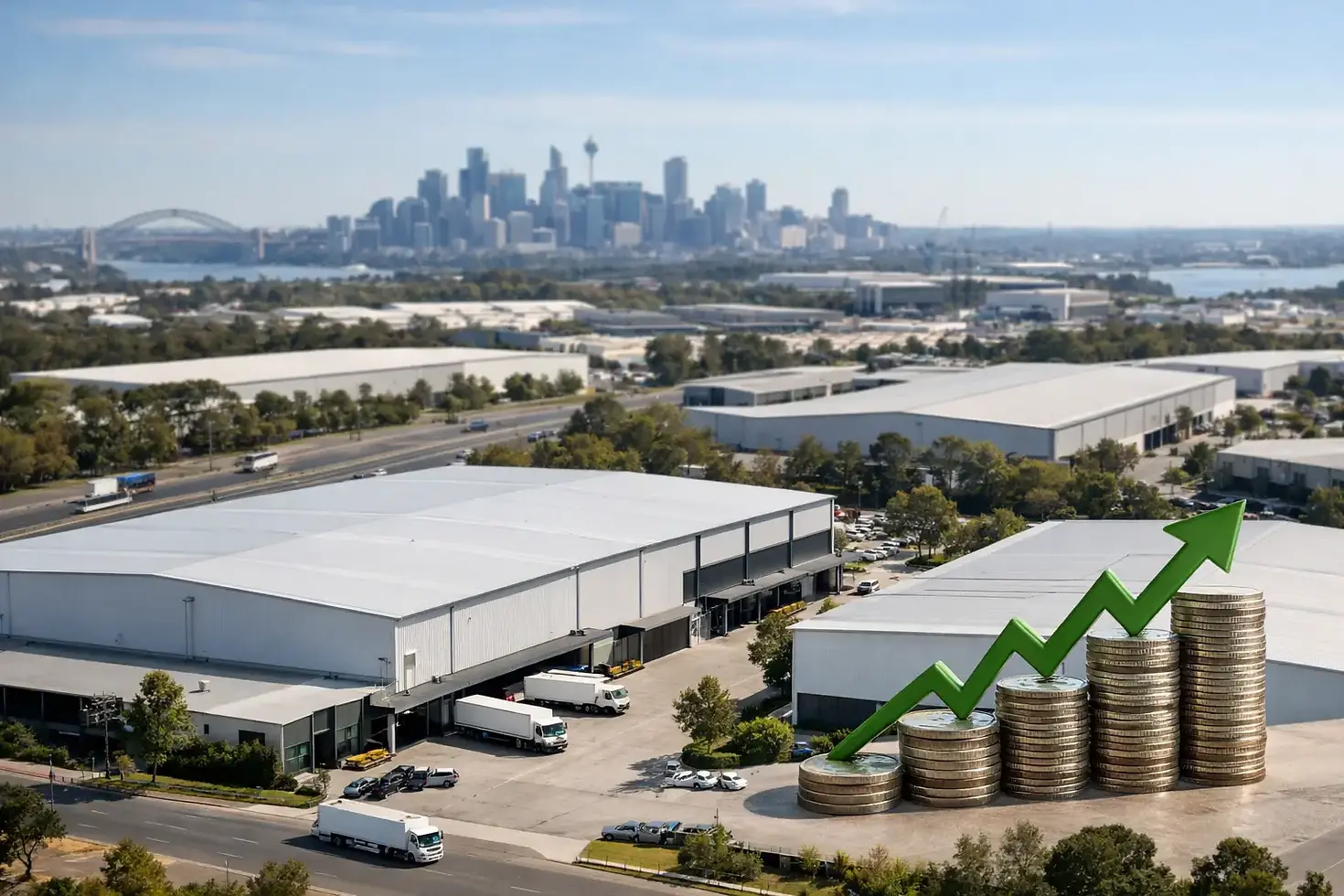
Industrial Rent Growth Trends for Sydney Sites
A warehouse lease that looked expensive two years ago can now look like a protective decision. That is the practical reality behind industrial rent growth trends across Sydney. For owners, the question is no longer simply how far rent can rise. For occupiers, it is not just whether a quoted rate fits this year’s budget. The real issue is how the premises, lease structure and location will support the business over the next three, five or 10 years.
Industrial property is operational property. A site with the right clearance, access, power supply and hardstand can save a business time and money every day. A cheaper building in the wrong location can cost far more through freight delays, staff travel, vehicle constraints and lost capacity. That is why rent growth needs to be assessed in context, not treated as a headline figure.
What is driving industrial rent growth in Sydney?
Sydney’s industrial market has been shaped by a straightforward imbalance: businesses need well-located space, while suitable land is difficult to create. Rezoning, infrastructure projects and competing residential or mixed-use demand have reduced industrial supply in several established precincts. New stock takes time to deliver, and construction costs, finance costs and compliance requirements have lifted the cost base for new developments.
Location remains a major dividing line. Properties close to major roads, Port Botany, Sydney Airport, intermodal facilities and dense customer catchments attract a different level of demand from sites on the metropolitan fringe. For a distributor, trade supplier, food operator or service business, shorter delivery runs may justify a higher rent because the premises improve the broader operating model.
The type of building also matters. Modern warehouses with high internal clearance, efficient loading areas, secure truck circulation, sprinkler systems, substantial power and quality office accommodation are not interchangeable with older stock. Older buildings can still be excellent business premises, particularly where they offer generous hardstand or a tightly held location. But they may require more capital, have lower efficiency or face limits on access and compliance.
Industrial rent growth trends are not uniform
It is tempting to speak about industrial rents as if every warehouse, factory and yard is moving in the same direction. They are not. Prime logistics facilities and secondary industrial units can experience very different demand, vacancy and rental pressure, even within the same suburb.
Large-format facilities often appeal to national tenants that place a premium on transport connectivity, automation potential and building specifications. Smaller units may be driven by local trade businesses, importers, light manufacturers and growing owner-operators. Their requirements can be less standardised. A small business may value street exposure, customer parking and a showroom just as much as warehouse height.
This is where broad market reports can be useful but insufficient. They show the direction of travel, yet they do not tell you whether a particular building has a loading dock that works for your fleet, whether B-double access is realistic, or whether the lease allows the use you actually need. A rent figure without that detail is only half the analysis.
There is also a difference between face rent and effective rent. A landlord may agree to a higher face rent while offering an incentive, fit-out contribution, rent-free period or staged commencement arrangement. Another landlord may offer little incentive but provide a longer term, more favourable review structure or early access for fit-out. Neither proposal is automatically better. The right answer depends on cash flow, capital expenditure, growth plans and the value of certainty.
What landlords should focus on now
Strong market conditions do not remove the need for discipline. The best tenants are assessing the whole offer, not merely the asking rate. They want premises that help them operate safely and efficiently, a responsive landlord and a lease that does not create unnecessary surprises.
Owners should first be realistic about the property’s competitive position. A modern freestanding facility in a supply-constrained area deserves to be marketed accordingly. A dated unit with limited loading, poor presentation or unusual access may still lease well, but the rental expectation and incentive strategy need to reflect its limitations.
A considered leasing campaign starts with the building itself. Address deferred maintenance, assess lighting, drainage, security, amenities, compliance and presentation. Small upgrades can materially change a prospect’s first impression and reduce objections during negotiation. Industrial occupiers are not looking for glossy finishes for their own sake. They are looking for a site that will not become an operational headache.
Lease structure deserves the same attention as the advertised rent. Annual reviews, market reviews, options, make-good provisions, outgoings recovery and permitted use clauses all affect the investment outcome. A short-term uplift achieved through an aggressive deal can be outweighed by vacancy risk or a tenant relationship that deteriorates early. Good property management protects the income stream after the lease is signed, not just at the point of transaction.
How tenants can respond without overpaying
For tenants, waiting until a lease is about to expire is one of the costliest mistakes in a tight industrial market. Relocation is rarely simple. Racking, plant, power upgrades, office fit-out, approvals, IT systems, stock movement and staff communication all take time. A business that starts planning early has more options and more negotiating power.
Begin by defining the operational brief. How much warehouse area is genuinely required? Is hardstand essential? What vehicle types need access? Does the business need high power, food-grade capability, cool rooms, trade retail exposure or proximity to a particular customer base? These questions separate a suitable property from one that is merely available.
Then compare occupancy cost rather than rent alone. The relevant calculation includes net rent, outgoings, incentives, fit-out costs, make-good exposure, relocation costs and the effect of the location on transport and labour. A lower rental rate can be a false saving if it adds an hour to each delivery run or makes recruitment harder.
Tenants should also take care with rent review clauses. Fixed annual increases provide predictability, while CPI-linked reviews move with inflation and market reviews can produce a sharper reset depending on the wording and evidence. There is no universal best clause. A business with stable margins may prefer certainty; a business expecting rapid growth may place greater value on flexibility, options and assignment rights.
The growing value of flexibility
The strongest industrial leases are increasingly built around commercial reality. A tenant may need staged occupation, an option over adjacent space, landlord works before commencement or the ability to assign the lease if the business is sold. An owner may need a personal guarantee, bank guarantee, clear reinstatement obligations and confidence that the intended use will not damage the property or create compliance concerns.
These matters are negotiable when raised early and handled properly. They are much harder to repair after heads of agreement have been signed or a business has committed to vacating its existing premises. Legal, tax and property considerations often overlap in industrial transactions, particularly where a business is expanding, restructuring or acquiring an investment through a related entity.
The point is not to make every deal complicated. It is to identify the few terms that could materially affect the business or investment and deal with them openly. Clear documentation and direct communication usually save far more time than they consume.
Reading the next phase of the market
Industrial rent growth can moderate without rents falling across the board. When finance is expensive, consumer demand softens or new supply reaches the market, tenants may gain more choice and incentives may reappear in selected locations. That does not mean every owner must discount, nor does it mean every tenant should delay a decision.
The likely outcome depends on the asset. Well-located, functional sites with limited replacement supply tend to hold their appeal. Buildings with compromised access, weak specifications or a narrow tenant pool may face more competition. Businesses should therefore avoid making decisions based on a single prediction about where rents will be next year.
A better approach is to test the decision against the cost of being wrong. If a business cannot afford operational disruption, securing the right site may matter more than holding out for a modest rent reduction. If an owner has a vacancy in a building with genuine shortcomings, a well-qualified tenant on sensible terms may be worth more than an ambitious asking rent and months of lost income.
At William Properties, we see the best industrial decisions made when owners and occupiers look past the headline rate and deal with the full commercial picture. The right premises should give a business room to perform and give an owner confidence that the income is built to last.
Before you accept a renewal, issue a rent review notice or commit to a new warehouse, put the property through an operational and financial test. The rental number matters, but the deal around it is where value is created or lost.


Comments